LeadEngine — Real Estate Lead Scoring
The Problem
Property sales teams work leads in the order they arrive. A first-time browser who clicked one listing gets the same follow-up cadence as a pre-approved buyer who has viewed 18 properties and submitted an inquiry. The CRM's native scoring rarely helps: it is either rule-based — if income > X, mark as hot — or so opaque that agents learn to ignore it. A score only changes behavior when it is fast enough to act on the moment the lead arrives, and transparent enough that an agent trusts it.
Why It Matters Commercially
An agent's selling hours are the brokerage's scarcest input. Every hour spent courting a casual browser is an hour a high-intent buyer waits — often long enough to buy through whoever called back first. Prioritization is the lever: the same headcount and the same lead flow can convert very differently depending on nothing more than who gets called first.
What We Built
A lead scoring engine that evaluates every inbound lead the moment it arrives — twelve signals, scored in under 10 milliseconds — and returns a High, Medium, or Low priority tier with a confidence percentage and a recommended action.
The twelve signals span three categories:
- •Demographic indicators: age, income, credit score
- •Behavioral signals: website visits, email opens, property views, time on site, contact attempts
- •Intent markers: inquiry submitted, financing pre-approved, budget disclosed, location preference set
Scoring in under 10 milliseconds means the tier can be assigned in real time, as part of lead capture rather than as a nightly batch. And the output is legible: a lead scoring 95% High with "priority follow-up within 24 hours" tells an agent to act today; a 90% Low tells a manager not to spend a senior agent on it.
The twelve signals shown are the demonstration set. In production, the signal mix is selected with the client — weighted to the data the business actually has, and constrained by the fairness and compliance rules that govern its market.
Outcome
The team stops calling every lead in the order they came in. Inbound leads are scored, ranked, and queued by tier — and the senior agents on the floor know which ones to call first. Lead allocation becomes a function of buyer intent, not arrival time.
Where This Pattern Applies
Fast, transparent intake scoring adapts to any funnel where follow-up capacity is scarcer than leads. Mortgage brokers triaging applications by completeness and readiness to proceed. Insurance agencies separating price-shoppers from genuine switchers. Admissions teams ranking inquiries by enrollment intent. B2B teams scoring demo requests before they reach a rep's calendar. The signal set is rebuilt for each business; the architecture — instant scoring, clear tiers, a recommendation an operator can act on — carries over.
See It in Action
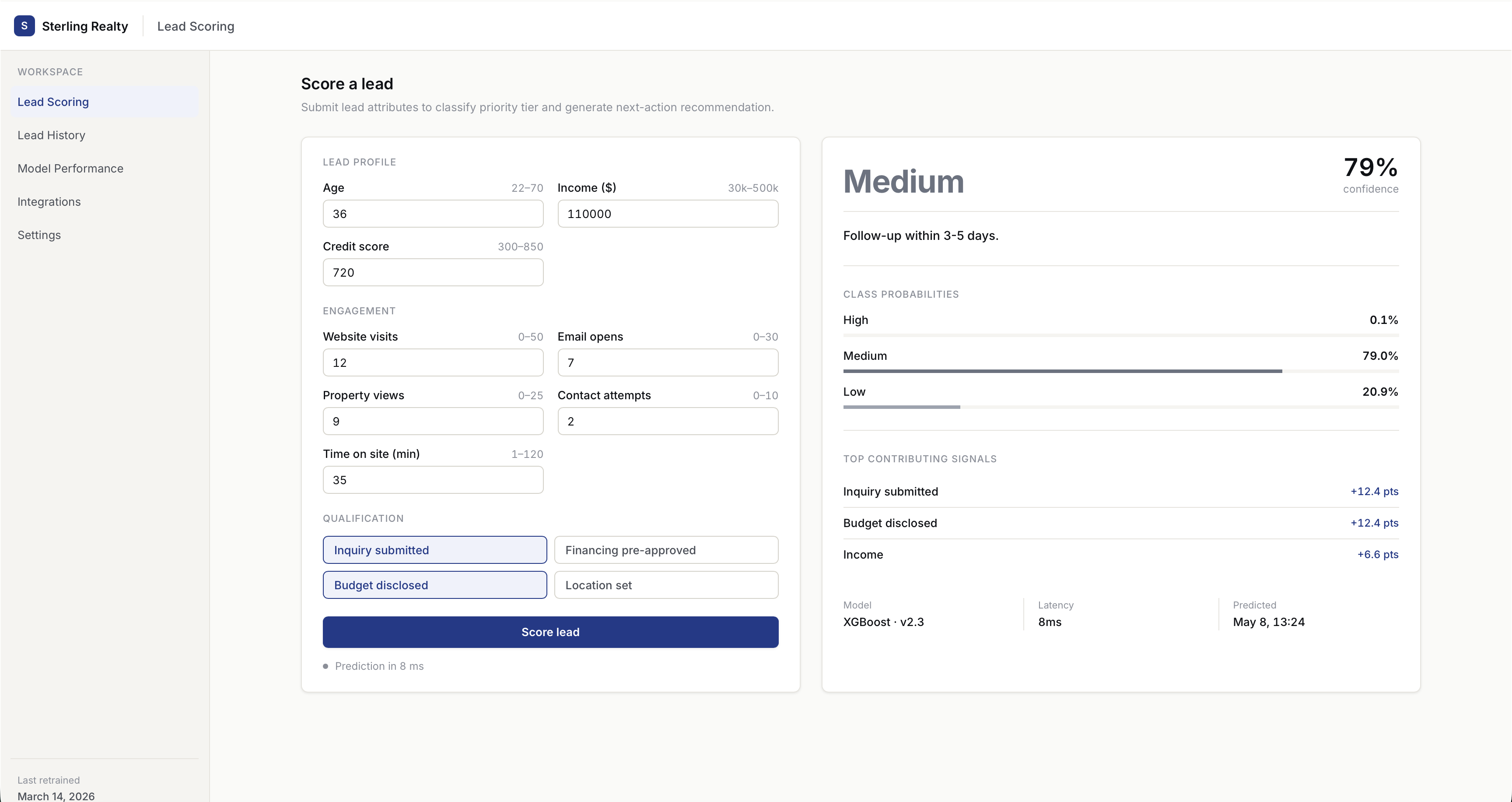
A property buyer lead scored across all 12 signals — age 36, $110K income, 720 credit score, 9 property views, inquiry submitted and budget disclosed — classified as Medium priority at 79% confidence in 8ms.
Which of today's leads actually deserve your best agent?
We can evaluate the signals in your existing lead data and design a scoring system fast enough to route on and transparent enough for agents to trust.
Explore a Similar System